
Trichem South
Hygiene For Health
From 1st June 2015, Trichem South have been reviewing our products under the new Globally Harmonised System of Classification and Labelling of Chemicals (GHS).
As we have detailed below in Appendix 1, the system was designed to standardise how the hazardous properties of chemicals are classified throughout the world.
GHS is implemented in the EU via the CLP Regulation (Classification, Labelling and Packaging). Historically, chemical products were regulated in the UK under CHIP (Chemical Hazard Information & Packaging). To find out more on this system, please refer to the HSE website below (Appendix 2) or alternatively, please give our Head Office a call and we will be pleased to help you.
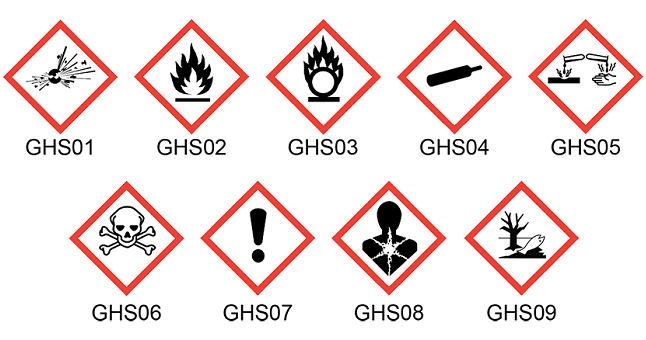
There will be two “key” changes which are very visible. The traditional orange square Hazard Symbols are being replaced with new Diamond shaped hazard pictograms. Some of the internal symbols within the diamonds are similar although there are some new pictograms. We have detailed these below on Page 3.
In addition, where previously there may have been “Indication of Danger” with words (such as Toxic / Corrosive) etc, these will be replaced by two “Signal Words”. These will be “Danger” for severe hazards and “Warning” for all other items.
The “Risk” (R) phrases are also changing to “Hazard” (H) statements and “Safety” (S) phrases are changing to “Precautionary” (P) statements. You will see some these descriptions / hazard statements on some labels as well as newly revised Safety Data Sheets. Again, these are detailed below on Page 4.
One key area to highlight is that some existing chemicals and ranges of products that customers use, may change in there classification of “risk”.
As previously assessed, a system of detailed calculations and thresholds are used to classify each product. This is important to provide continuity in identification as well as the need to avoid unnecessary testing on animals. Products containing ingredients that are over a certain threshold level are required to display the appropriate Hazard Pictogram and Statements on the label.
During the review period changes have been made to assess “risk”. Some of the threshold levels in CLP are lower than under CHIP. For example under “CHIP” a product would need to contain more than 20% of an ingredient classified as R36 (Irritating to eyes) to trigger an ‘Irritant’ hazard symbol. Under CLP however, this is reduced to 10% to trigger a hazard pictogram. This will result in many products being classified where previously they were not. This could be a noticeable percentage.
One of the initial concerns from customer feedback is that with the changes implemented, have products become more dangerous or hazardous to use?
Simply put, despite the legislative changes brought in under CLP, Trichem South has not changed the formulations on any product. As mentioned, some of the thresholds have changed and are now lower under CLP.
One area particularly affected is the Risk Phrase (Now Hazard Statements), especially the “H318”, “Causes serious eye damage”. This was previously R41, “Risk of serious damage to eyes” under CHIP.
Under previous governance, this has changed significantly from what was a 10% threshold, which triggered an “Irritant” symbol to now just a 3% threshold, triggering a GHS05, “Causes Damage”
In simple terms, the “risk” has moved from an Irritant symbol to a Corrosive symbol, yet with no change to the product formulation.
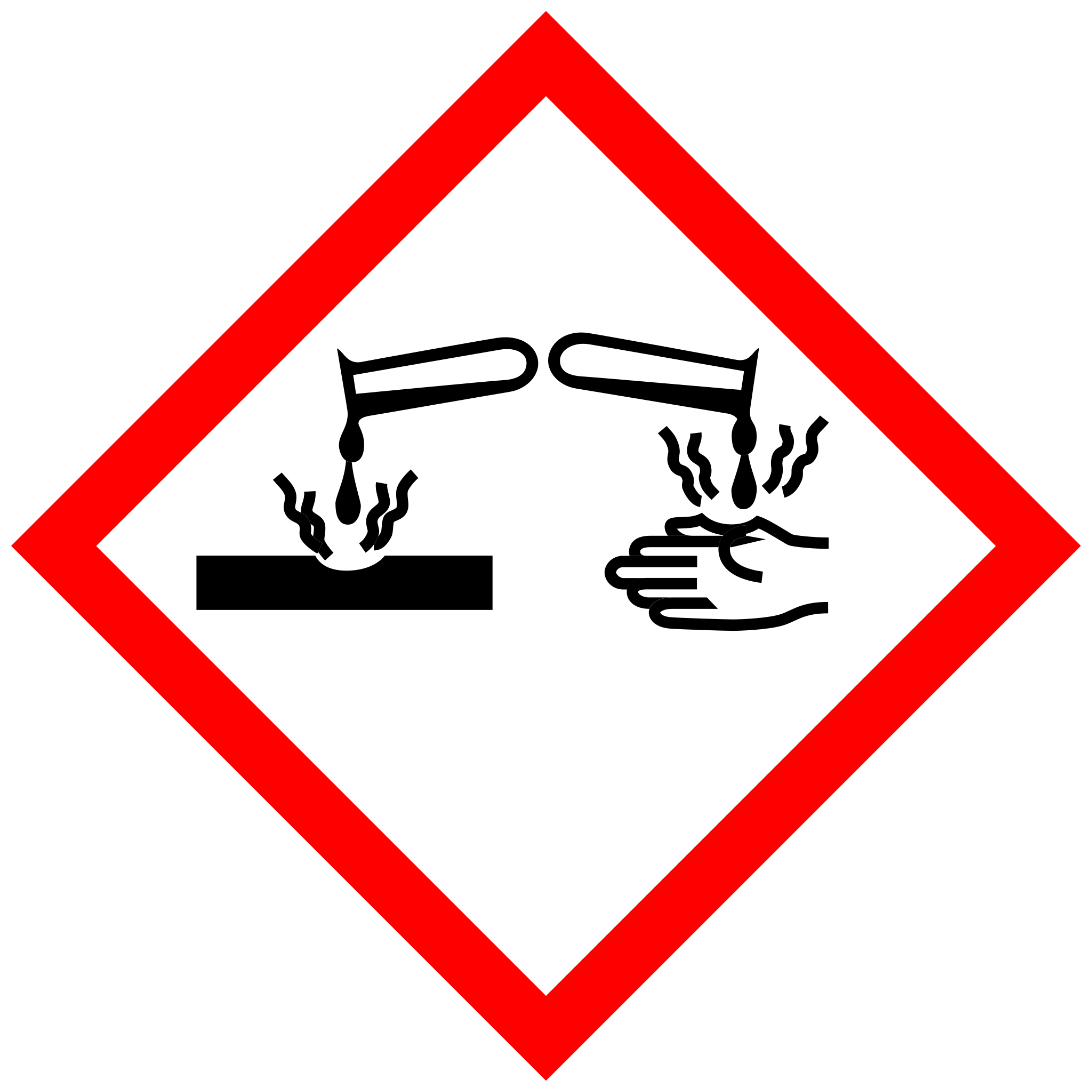
The image that is currently regarded as “corrosive” is and still will be used on products that contain raw materials such as Caustic Soda. These predominantly are Dishwasher Detergents and Over Cleaner.
In the future however, this symbol will also be used on products which may contain only 3% of a certain type of raw material.
As a manufacturer of chemicals, we are committed to supporting our customers through these important changes as well as reassuring them that at present, the chemicals that you have been using have not changed. It is just the process and legislation behind the Controlling of Substances that has changed.
For this reason, it is hugely important that all users of chemicals read the Hazard Statements on CLP labels, rather than just a cursory glance at the image. It is also vital staff comply, understand and follow internal procedure of their employment on all above COSHH requirements as well as knowing where the main “COSHH” folder is based within the place of work.
We understand and agree that a global system of assessing and classifying chemicals is necessary. We also accept that there could be concerns from staff and users reacting to seeing Hazard signs on products where previously there were none.
As always, it is vital that you are supported and educated by your employer / Manager to assess the risk when using any of Trichem’s chemicals.
It is very important that users of chemicals are fully aware of the changes and understand the regulations behind their use. It is our responsibility as manufacturer as well as your employers to communicate and issue detailed product support and information as the changes occur. This information must to be relayed to end users by their employers so they are able to recognise the new Pictograms and the associated risks and the need to review COSHH Risk Assessments.
If you use chemicals at work, you should:
You will find further details on CLP Regulation via the Health and Safety Executive (HSE) website, the link is detailed below on Appendix 3
Attached below are details of the new diamond symbols. Please check with your appropriate Manager for more support / training or call us at our Head Office.
As detailed above, in addition to the symbol changes, CLP has brought in a change to the “Risk” & “Safety” changes. These changes will impact on both labels and Material Safety Data Sheets, often referred to a “COSHH Sheets”.
We have summarised the main changes below:
‘Risk (R) Phrases’ are to change to ‘Hazard (H) Statements’
H200-H299 Physical Hazard
H300-H399 Health Hazard
H400-H499 Environmental Hazard
‘Safety (S) Phrases’ are to change to ‘Precautionary (P) Statements’
P100-P199 General e.g. Keep out of reach of children
P200-P299 Prevention e.g. Protect from moisture
P300-P399 Response e.g. If on skin
P400-P499 Storage e.g. Store locked up
P500-P599 Disposal e.g. Dispose of contents/container to. . .
As detailed on the HSE website, there will be a certain period of time, from the 1st June 2015, when labels may not change. The reason for this is detailed below.
As a specialised manufacturer, Trichem has always been proud to say that we produce the majority of our own products. As we purchase several hundred different raw materials, many of these often have a long shelf life. During this transitional period under the CHIP / CLP changes, (1st June 2015 – 31 May 2017) there is a “Derogation” from re-labelling & re-packaging of mixtures.
There are certain limited circumstances where the transitional arrangement for mixtures can be extended. The derogation, i.e. an exemption from or relaxation of the rule of law, can be extended.
This is where a mixture (formally a preparation) has already been classified, labelled and packaged according to CHIP and placed on the market before 1st June 2015. It does not have to be recalled for re-labelling and re-packaging. This derogation is available until 1st June 2017.
We understand that some of these changes can be confusing. Please feel free to refer to the Appendices at the bottom of this article, call us at our Head Office or speak to your Relationship Manager who will only be too pleased to offer support.
1. European Regulation (EC) No 1272/2008 on classification, labelling and packaging of substances and mixtures came into force on 20 January 2009 in all EU Member States, including the UK. It is known by its abbreviated form, ‘the CLP Regulation’ or just plain ‘CLP’.
The CLP Regulation adopts the United Nations’ Globally Harmonised System on the classification and labelling of chemicals (GHS) across all European Union countries, including the UK.
As GHS is a voluntary agreement rather than a law, it has to be adopted through a suitable national or regional legal mechanism to ensure it becomes legally binding. That’s what the CLP Regulation does.
As GHS was heavily influenced by the old EU system, the CLP Regulation is very similar in many ways. The duties on suppliers are broadly the same: classification, labelling and packaging. The existing legislation on classification, labelling and packaging has been agreed at European Union level and, from 2015, will be directly applied on all EU member states, including the UK.
The rules they have to follow when they are classifying will change though, and a new set of hazard pictograms (quite similar to the old ones) are used:
2. www.hse.gov.uk/chemical-classification/legal/clp-regulation.htm
3. www.hse.gov.uk/chemical-classification/index.htm